


Urban Heat
Recently I have been learning so much about urban heat. Growing up and living with heat, I have certainly taken this topic for granted.
I started and ended my recent Urban Heat Mission… with Rain. This blog is my reflection from the field. After weeks of relentless, record-breaking heat days when water fights during the Water Festival felt less like celebration and more like survival, my urban heat journey in Korat began under rain. Gentle, cooling rain. The kind we had all been wishing for just days before.
But the stories the heat left behind did not wash away. We started the day listening to more than 20 elderly residents gathered in a village nestled right in the heart of the city. The common statement I heard was that it's hot. So what? What can anyone do about it, what help can be offered, except to look after ourselve.
"อากาศร้อน ไม่รู้จะให้ไปช่วยยังไง มันเป็นอากาศ ต้องช่วยตัวเอง"
Afterward, our team stepped outside and took a walk down the street. That’s when the city started speaking in a different way. We came across a cluster of Grab motorbike drivers huddled together, waiting for food orders to be ready. They were well covered up, some we could only see their eyes. We struck up a conversation. Rainy days, they told us, were good for business. Orders surged. People stayed in. Deliveries increased. But hot days? Not much changed. The heat didn’t slow demand. It didn’t ease their work. It simply became part of it. They just kept going.

A few steps further, we noticed an elderly man pushing a trolley. Deep-fried bananas, potatoes, street snacks. We bought some (they were yummy!) and started chatting.
He was over 80. Over 80, and it was already past 11 a.m, well into the unforgiving heat yet he had only just begun his round for the day. No protective gear. No special clothing. Just his usual outfit, his shoes, and his steady pace. And his energy.
He smiled easily. Spoke openly. Shared stories from where he came from, to the memory of paying respect to his former King during the funeral. The conversation wandered. It didn’t follow any structured research guide. But what stayed with me was his mindset. In that heat, under that sun, he was cheerful, present, and proud.
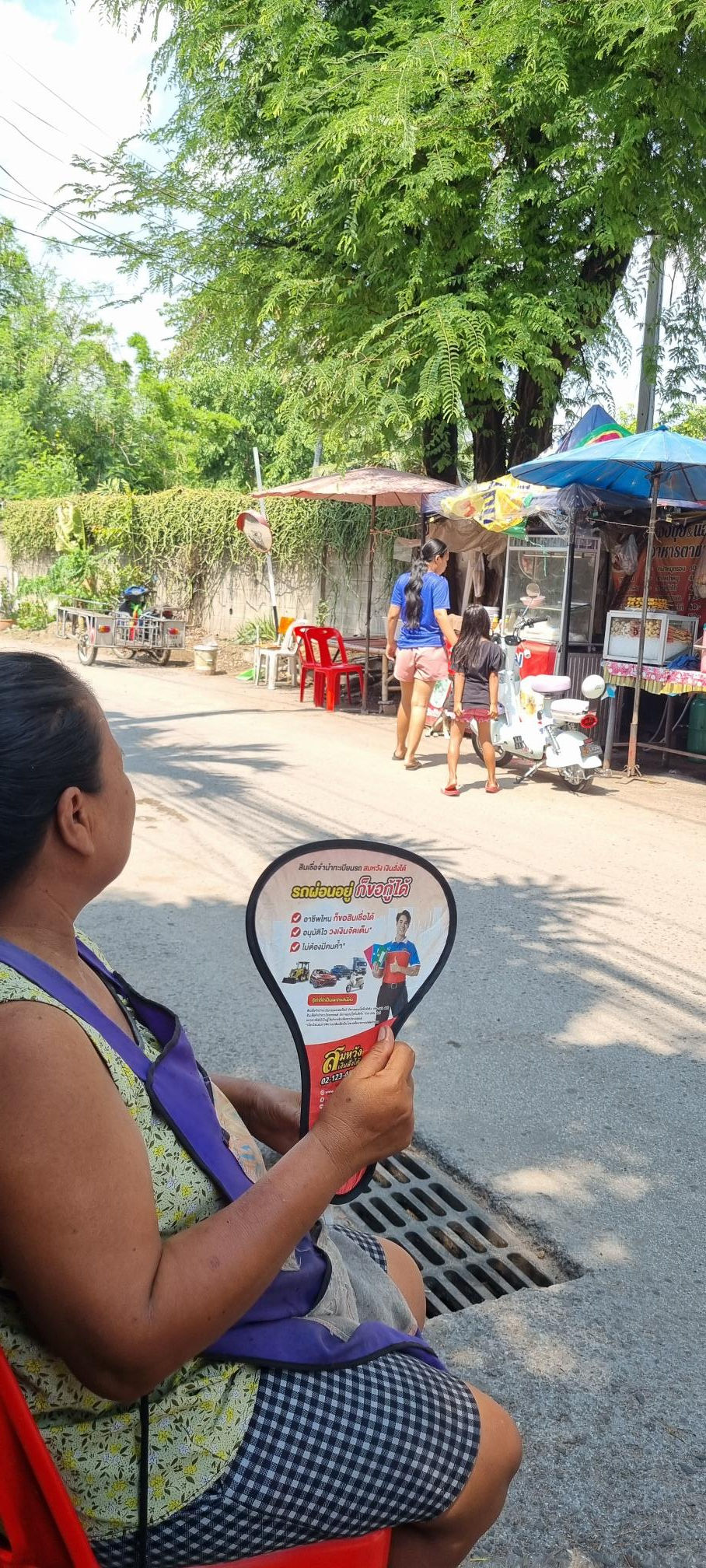
Not far from him sat a woman under the tree shade across from her noodle shop. Armed with a paper fan, she swung with impressive determination. Her shop stood just opposite, empty. “Sales are low when it’s hot,” she told us. Then she paused. “Actually… these days, hot or not, there are just not many customers anymore.” For her, the heat was only part of a larger story.
As we wrapped up our walk, a group of older women from a street-side shop called out to us:
“Where are you heading? Why aren’t you covering up? Not even umbrella?”
Their concern was immediate. Direct. Almost maternal. And in that moment, I felt it.
How easy it is to forget. Even for us, researchers walking in with questions about heat, resilience, and adaptation, we had not fully considered ourselves in the equation. Studying heat is one thing. Being in it is another. Living with it daily is something else entirely.
This was not my first visit to this town. Six months ago, we had been here. Listening, introducing ideas, starting conversations. Yesterday, we met government officials again. And something had shifted. Familiar faces returned. Not out of obligation, but with engagement, participation and energy.
The Department of Health shared that, for the first time, this year, they had convened an Emergency Operation Centre meeting focused specifically on heat. The Department of Social Development and Human Security had taken steps too. Their leadership had requested a survey identifying those most at risk of heat stroke to better prepare targeted support. It was promising. Policy was beginning to move.
But somewhere between policy and people, there is a space we don’t always see clearly. And that became my biggest “aha” moment on this visit. We often talk about individuals, the elderly man, the noodle seller, the drivers. We talk about policymakers, the departments, strategies, plans.
But what about those in between? The ones who translate ideas into action? In Thailand, there is a powerful yet often under-recognised group: Village Health Volunteers. We met 5 of them. A group of 13 in total in the village we met and 12 are women!
Many of them, elderly themselve, have been doing this work for over 20 years, long before any monthly allowance existed. They chose this role when it was purely voluntary. Why? All women answered simply because they love helping people.
“มาด้วยใจ” - I join following my heart.
They visit elderly residents in their villages at least twice a month. They check in. They observe. They care. They are the bridge.
So I asked them: “Who visits you?”
They smiled. “No one.” Their roles are essential, yet invisible.
Like many mothers. Like many caregivers. Like many women whose contributions quietly hold systems together. We celebrate them once a year. But we rarely truly see them. Please really "see" them beyond Mother's Day or Women's Day.
As I reflect on this journey starting in the rain, shaped by heat, I’m reminded that climate is not just about temperature. It’s about people, systems, gaps, and connections. It’s about who is seen and who is not.
As we push forward with research, policy, and solutions for urban heat, I hope we remember to look beyond the obvious. To notice the in-between. To recognise those who show up not because they are told to, but because they care. And to really, truly see them.


Comments